
Mental Education for Kids: Meaning, Benefits & How to Start
Quick answer: Mental education is the training of a child's thinking skills, such as concentration, memory, visualization, reasoning and mental calculation. Instead of relying only on memorizing or writing, children learn to work with information in their minds. Started early and practiced steadily, it helps children learn faster, stay focused and feel more confident with numbers and problem solving.
Most parents can name a child who is "smart" but struggles to sit and focus for ten minutes. Others can memorize a whole chapter but freeze when a math problem is worded differently. Often the gap is not intelligence but how the child has been trained to use their mind.
That is what mental education is about. In this guide we explain what it means, why it matters, which skills it builds, and how parents can begin at home or through a structured program.
What Is Mental Education?
Mental education means deliberately building the mind's learning skills, not only teaching subject content. Traditional schooling mostly teaches what to learn (facts, formulas, chapters). Mental education focuses on how to learn:
Concentration: holding attention on one task without drifting
Memory: taking in information and recalling it when needed
Visualization: forming pictures in the mind, such as seeing a number or a shape without looking at it
Logical reasoning: breaking a problem into steps and finding a solution
Mental calculation: doing arithmetic quickly without pen, paper or a calculator
A note on the term: in everyday use, especially in India, "mental education" is often used to describe mental math and brain-skills training. That is the meaning we use in this article.
Why Mental Education Matters in Childhood
Children's brains are highly adaptable in the early school years. Habits of attention, curiosity and problem solving formed at this age tend to stay with a child. Here is why parents and teachers give it importance:
1. It supports academics across subjects. A child who can focus and hold information in mind does better in math, but also in reading comprehension, science and exams in general.
2. It reduces fear of numbers. Many children decide early that "math is not for me." When numbers become something they can see, handle and calculate quickly, that fear often fades.
3. It builds confidence. Solving a problem in your head, in front of others, is a real achievement for a child. That feeling carries into other areas of learning.
4. It prepares children for a world of screens. Calculators, phones and AI can give instant answers. The child who can think, estimate and reason without them has a lasting advantage.
Key Skills Children Build
Skill What it looks like in daily life Focus Finishing homework without constant reminders Working memory Following a multi-step instruction correctly Number sense Estimating a bill or checking change quickly Visualization Imagining a problem before solving it Speed with accuracy Finishing exam questions calmly and on time
Popular Methods of Mental Education
There is no single "right" method. These are the ones most commonly used with children:
Abacus training. Children learn to move beads on a frame to represent numbers, then gradually picture the frame in their mind and calculate without it. This is one of the most widely used methods for mental math. To learn more, read our guide on what is abacus and abacus classes for kids.
Vedic math. A set of calculation shortcuts that make large sums easier and encourage flexible thinking about numbers. See our complete guide to Vedic math classes.
Memory and concentration games. Puzzles, pattern games, card-matching, storytelling and "what changed?" observation games are simple ways to train the mind at home.
Reading and spoken communication. Retelling a story in their own words trains memory, sequencing and expression together.
Simple Mental Education Activities You Can Try at Home
You don't need special equipment to begin. Ten to fifteen minutes a day is enough for a young child.
Number of the day: Pick a number and ask your child to make it in as many ways as possible (for example, 12 = 10 + 2 = 6 + 6 = 3 × 4).
Kitchen math: Ask them to count, add and estimate while you cook or shop.
Memory tray: Place 6–8 small objects on a tray, let your child look for 30 seconds, cover the tray, and ask them to name what they saw.
Mental warm-up: Ask one or two quick sums before dinner, and make it a game, not a test.
Story retelling: After a story or a school day, ask your child to tell it back in order.
Screen breaks: Replace a small part of screen time with puzzles, building blocks or board games.
Keep it light. If it feels like extra homework, children switch off. Praise effort and improvement rather than speed alone.
What Age Should a Child Start?
Most structured programs start children at around 5 to 8 years, when they are developing number sense and fine motor coordination. Older children can also benefit. Older beginners often move quickly through the early stages because they already understand numbers well. What matters most is regular practice, not a perfect starting age.
How Long Does It Take to See Results?
Results depend on the child, how often they practice and the quality of teaching. Many parents first notice better focus and more comfort with numbers within the first few months. Deeper skills, like fast mental calculation, build over a longer period of steady practice. Be cautious of any program that promises dramatic results in a few weeks.
Tips for Choosing a Mental Education Program
Ask about the curriculum: Is it level-based with clear stages, or vague?
Check the trainers: Are they properly trained and certified?
Look for progress tracking: You should receive clear updates on your child's development.
Watch a class: A good center will let you observe or attend a demo.
Look for practice support: Home practice tools or apps keep learning going between classes.
Avoid unrealistic promises: Quick "guaranteed" results are a warning sign.
Mental Education at Orphosys Foundation
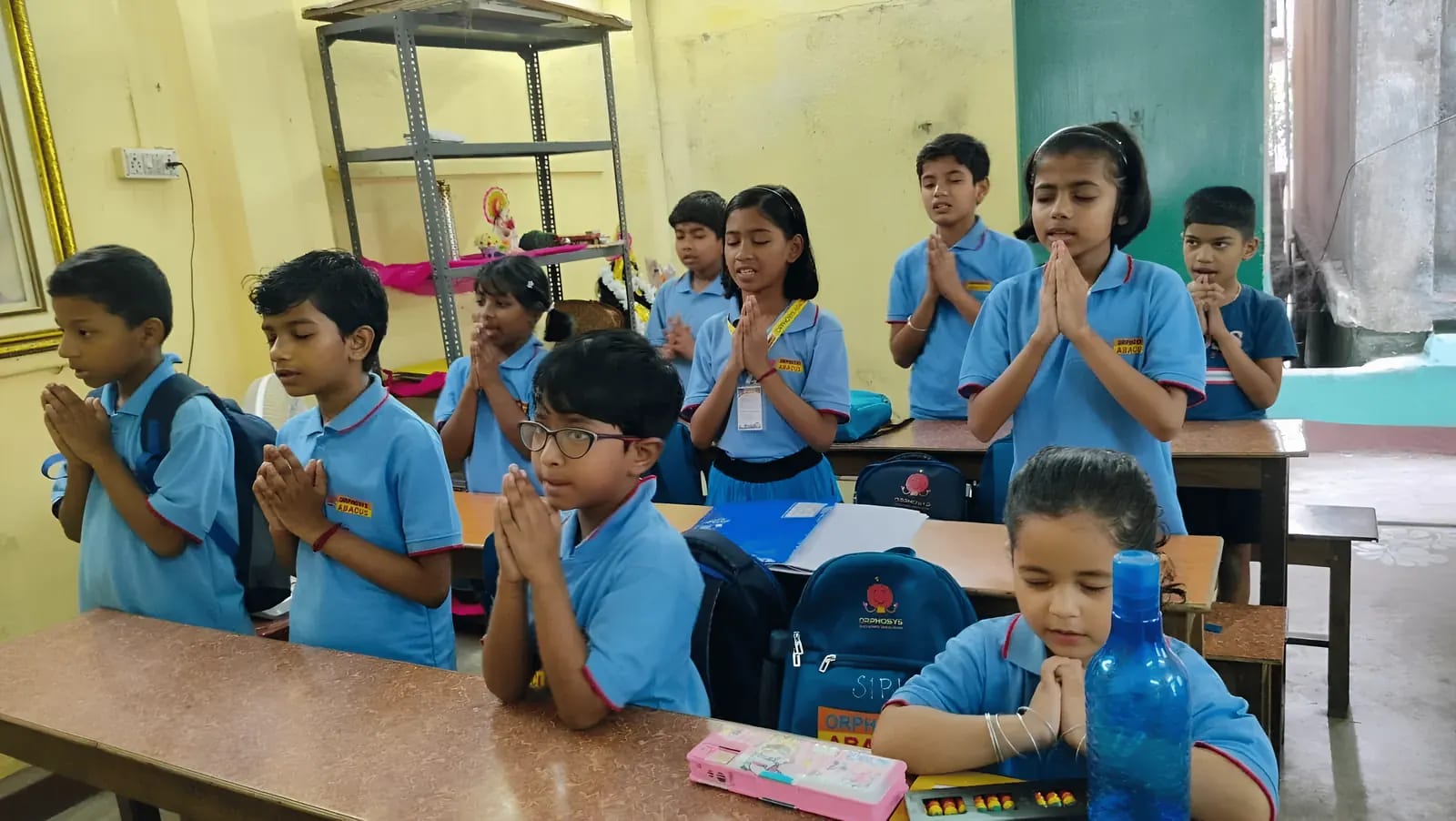
At Orphosys Foundation, we teach children through structured, level-based programs in Abacus, Vedic Math and Spoken English, supported by our AI tutor Ready in the Orphosys Kids app for practice at home. Our centers serve families across Kolkata, Ranchi (Jharkhand), Bhubaneswar (Odisha), Assam and Tripura.
Contact us: 📞 +91 90462 40290 | 🌐 orphosysfoundation.org
Frequently Asked Questions
What is mental education? Mental education is the training of thinking skills such as concentration, memory, visualization, reasoning and mental calculation, so children learn how to learn, not just what to learn.
Is mental education the same as mental math? Not exactly. Mental math is one part of it. Mental education is broader and also includes focus, memory and problem-solving skills.
At what age should my child start? Most programs begin between 5 and 8 years, but children of other ages can benefit too.
Can I do mental education activities at home? Yes. Simple games, kitchen math, memory trays and story retelling take only 10–15 minutes a day and help a lot.
Will it help my child in school? Better focus, memory and number confidence generally support learning across subjects. Results vary from child to child and depend on regular practice.
Final Thoughts
Mental education is not about making children work harder. It is about helping them use their minds better. With a little daily practice, a patient approach and the right guidance, children can grow more focused, more confident and more curious learners.
Related reading: Abacus Classes for Kids: Benefits, Right Age & What to Expect | Vedic Math Classes: The Complete Guide
Orphosys Team
Editorial team at Orphosys Foundation, dedicated to brain development and academic excellence.
Discussion (0)
Be the first to share an insight